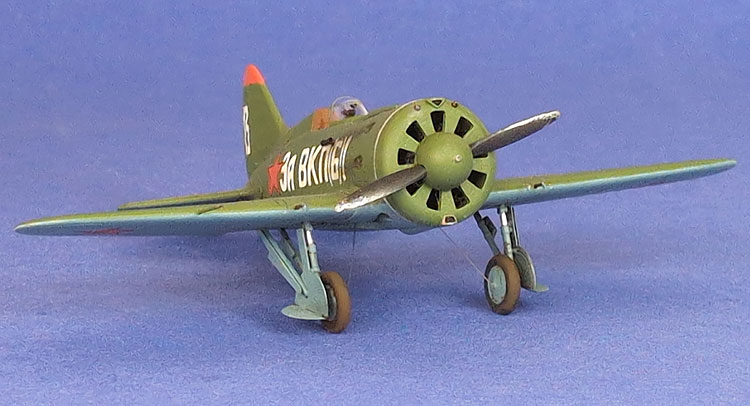
Not one of Hasegawa's better
efforts, in terms of fit and accuracy. Perhaps this is
why it doesn't seem to get re-released very often. The
main problem with this kit is the shape of the wings which
are far too tapered in plan view, the very same issue
Revell's ancient 1960s era I-16 has.
I used a set of resin replacement
outer wing panels from Neomega that are far superior to
Hasegawa's in shape and representation of the fabric covered
surfaces. I also used parts of an Eduard etched set, a
Yahu instrument panel and seatbelts, Clear Prop gunsight,
and Falcon vacuform canopy. The moulded-on exhausts in
the kit looked terrible so these were carefully removed
with a small cutting bit mounted in a Dremel then replaced
with fine brass tubing.
I used Hataka acrylic paints
from their Russian WWII aircraft set. This is the first
time I've used these paints, despite having many of their
sets, and I must say I was very impressed. There are three
different types of paints in their range: Red (Acrylic),
Orange (Lacquer based) and Blue (Acrylic for brushing).
The paints I used were from the latter range and they
sprayed very well, even though the box says they are optimized
for brush painting.
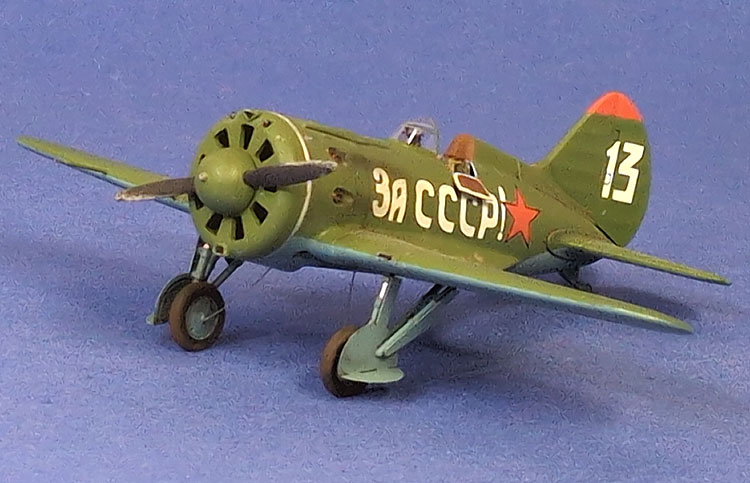
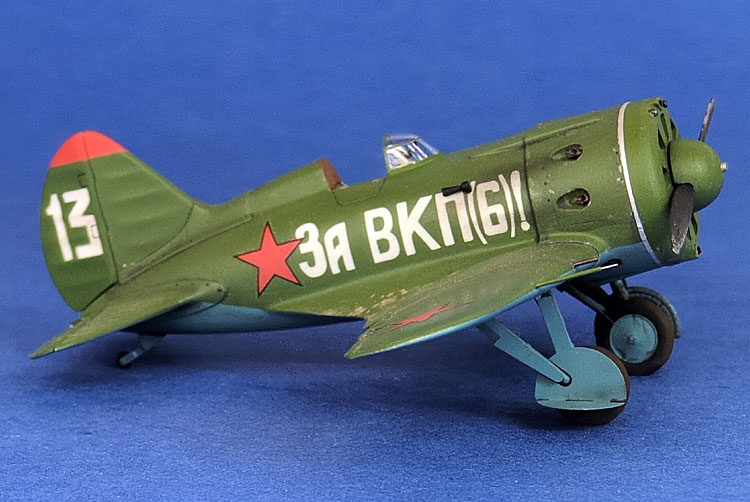
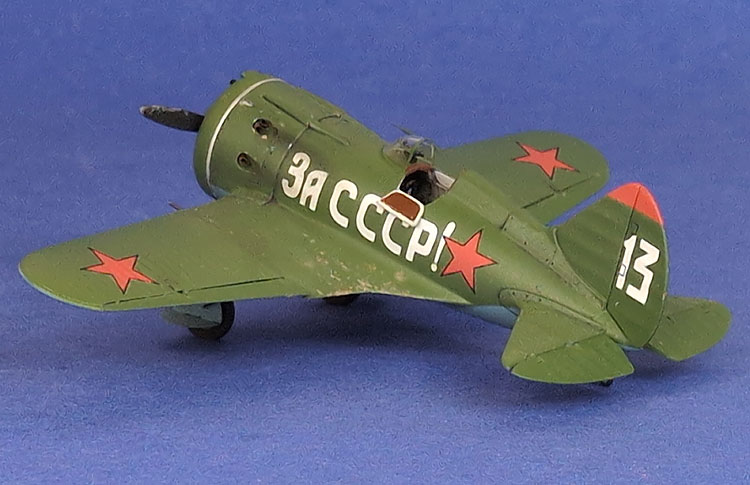
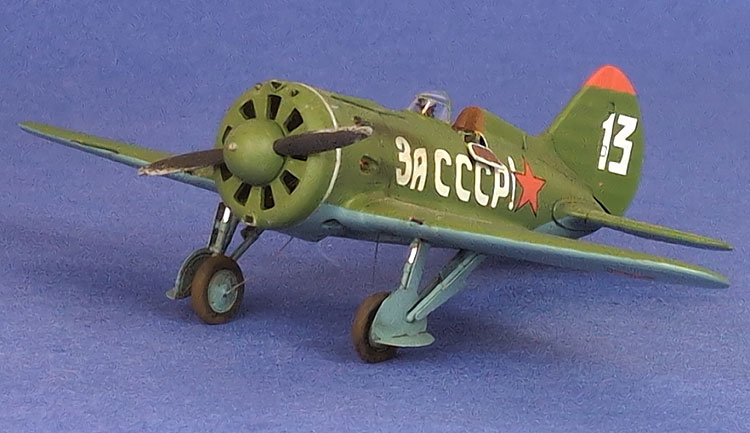
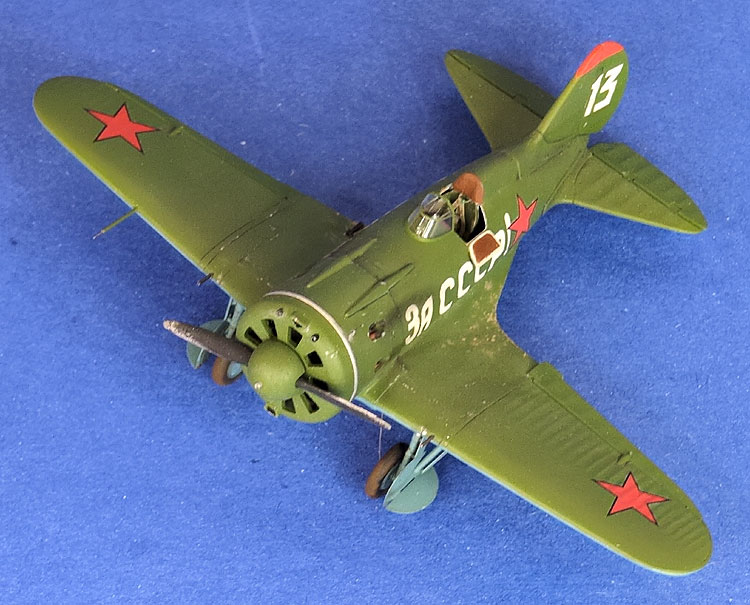
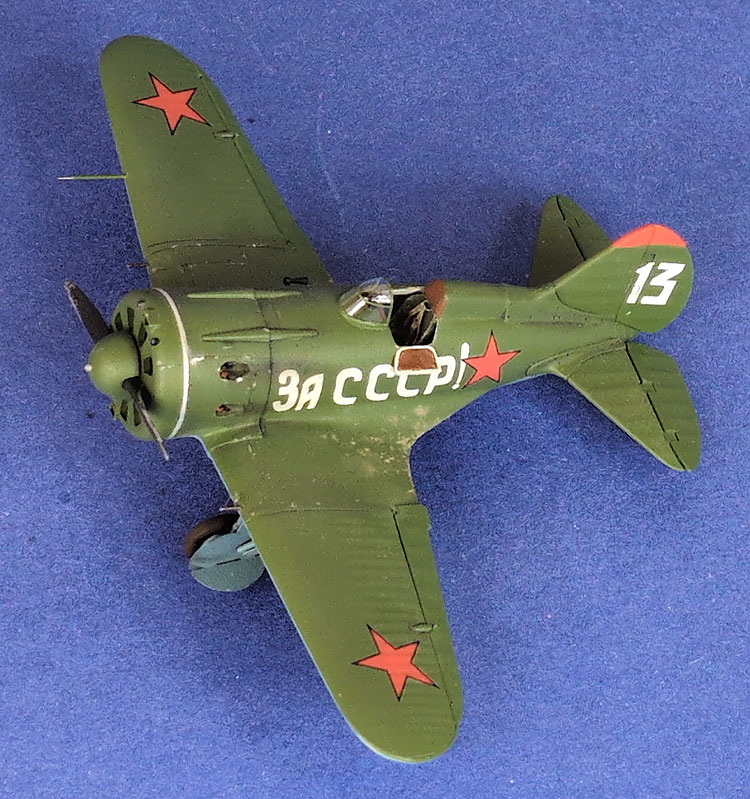
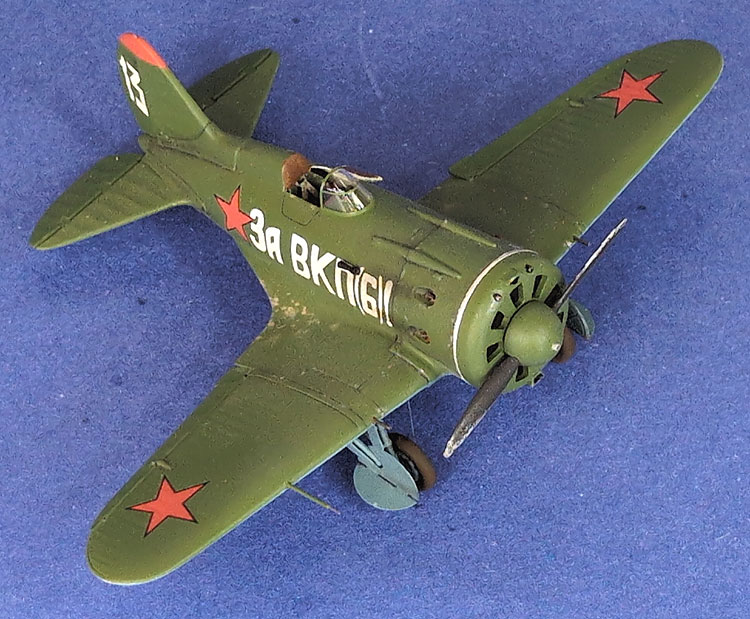
Hasegawa printed the patriotic slogans on the fuselage
and rudder numbers in silver for some reason when they
should be white. I created masks and painted these on
- see construction page for details. Russian stars are
from Print Scale.
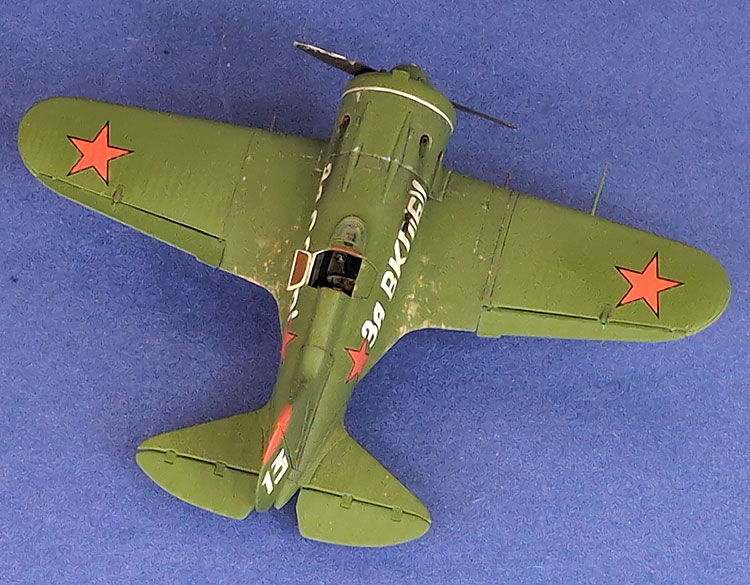
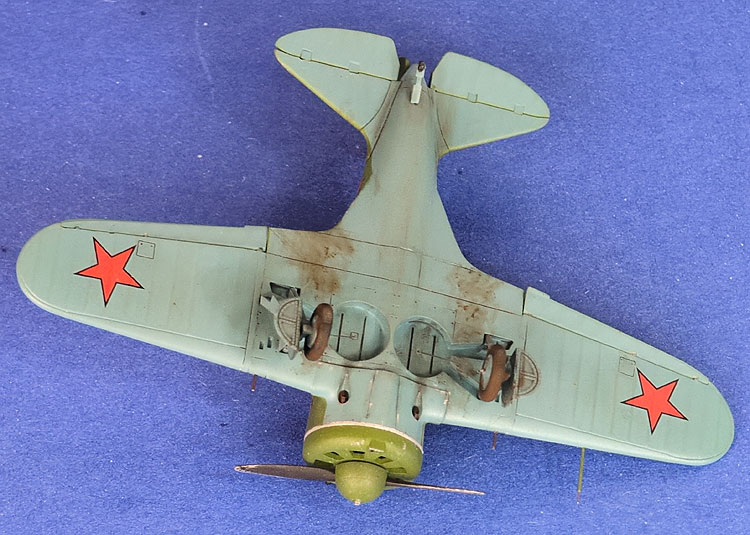
The Eduard photo etched
landing gear doors are a huge improvement on the kit items
which are thick and completely lacking in detail. I also
used a few other etched bits in the cockpit, though not
much can be seen given the tiny cockpit opening, even
with the door open.
Hasegawa's engine isn't
great and seems a bit small, but fortunately it is mostly
hidden with the cowling on. I added spark plug wires which
are almost visible if you look very closely through
the cooling vents. Guns are stainless steel tubing and
the pitot is Albion Alloys micro brass tubing with a bit
of very fine stainless tubing inserted in the end.
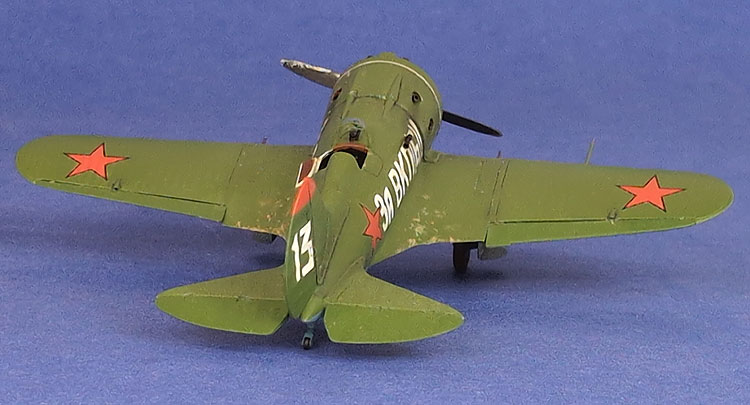
Neomega's wings have separate
ailerons and I cut off and repositioned the kit elevators
and rudder to match. I'm not terribly impressed with Hasegawa's
representation of the fabric covered surfaces but I guess
I can live with it. If I was to build another I-16 I would
opt for ICM's kit which looks much better.
Hasegawa got the shape
of the cockpit doors very wrong. The starboard one was
rescribed and the port side door opening was reduced in
size with .010" sheet plastic, the door itself being
reshaped from the piece removed from the fuselage.
Weathering was done with
pastels, the mud on the wheels is Humbrol's Dark Earth
weathering powder. Paint chips are done with Mr. Metal
Color Aluminum on the propeller and metal panels with
Tamiya Deck Tan used on the wooden airframe. The metal
band behind the cowling faceplate is a strip of Bare Metal
Matt Aluminum foil.



 Back
to 1/72 Aircraft Main
Back
to 1/72 Aircraft Main To
the Construction Page!
To
the Construction Page!